Picture yourself as the supervisor. You have ten applications in front of you, and almost all of them look the same: the same programme, the same courses, the same list of tools. Then you open one where the student shows what they have actually done. Which one do you remember? Exactly. That's what a portfolio does for you, and it doesn't have to be big to make a big difference.
Show it instead of saying it
"Knows Figma" and "has worked with React" are in almost every application. A project where the company sees what you built, the choices you made and how it turned out beats any list. Suddenly the supervisor sees how you think, not just which tools you have tried.
And no, this isn't just for designers and developers. If you write, plan events, analyse data or build things in a workshop, you definitely have something to show: before and after, a report, photos from the process or a problem you solved. It all counts.
Five things that make your portfolio strong
Think of your portfolio as your answer to the question every company asks: why should we pick you? One clear page goes a long way.
- An introduction at the top: who you are, what you study and the internship you're dreaming of.
- Two to four projects you're proud of, with your part, the tools and the result.
- Your own images of your work, each with a short explanation.
- Your most important skills, ideally linked to the projects so they show in practice.
- Links to LinkedIn, GitHub or other places where more of your work lives.
Let them see how you think
Here's a secret: companies that host interns aren't looking for perfect projects. They know you're there to learn. What they want to see is how you work. Show sketches, first versions and what you changed after feedback. A sentence like "the tests showed nobody found the button, so I moved it" says more than the most polished screenshot.
Keep it short and concrete. Three sentences per project are often enough: what the problem was, what you did and what it led to.

Avoid these traps
These are the most common things that drag down an otherwise good portfolio. The good news? They're all easy to fix.
- Example text left from the template, or lorem ipsum. It's noticed right away.
- Too many projects where nothing stands out. Pick your best and give them room.
- Only images, with no explanation of what you did.
- Links that are broken or need a login.
- Phone numbers and home addresses. Let companies reach you through LIA4ALL instead.
Build your portfolio on LIA4ALL, ready in minutes
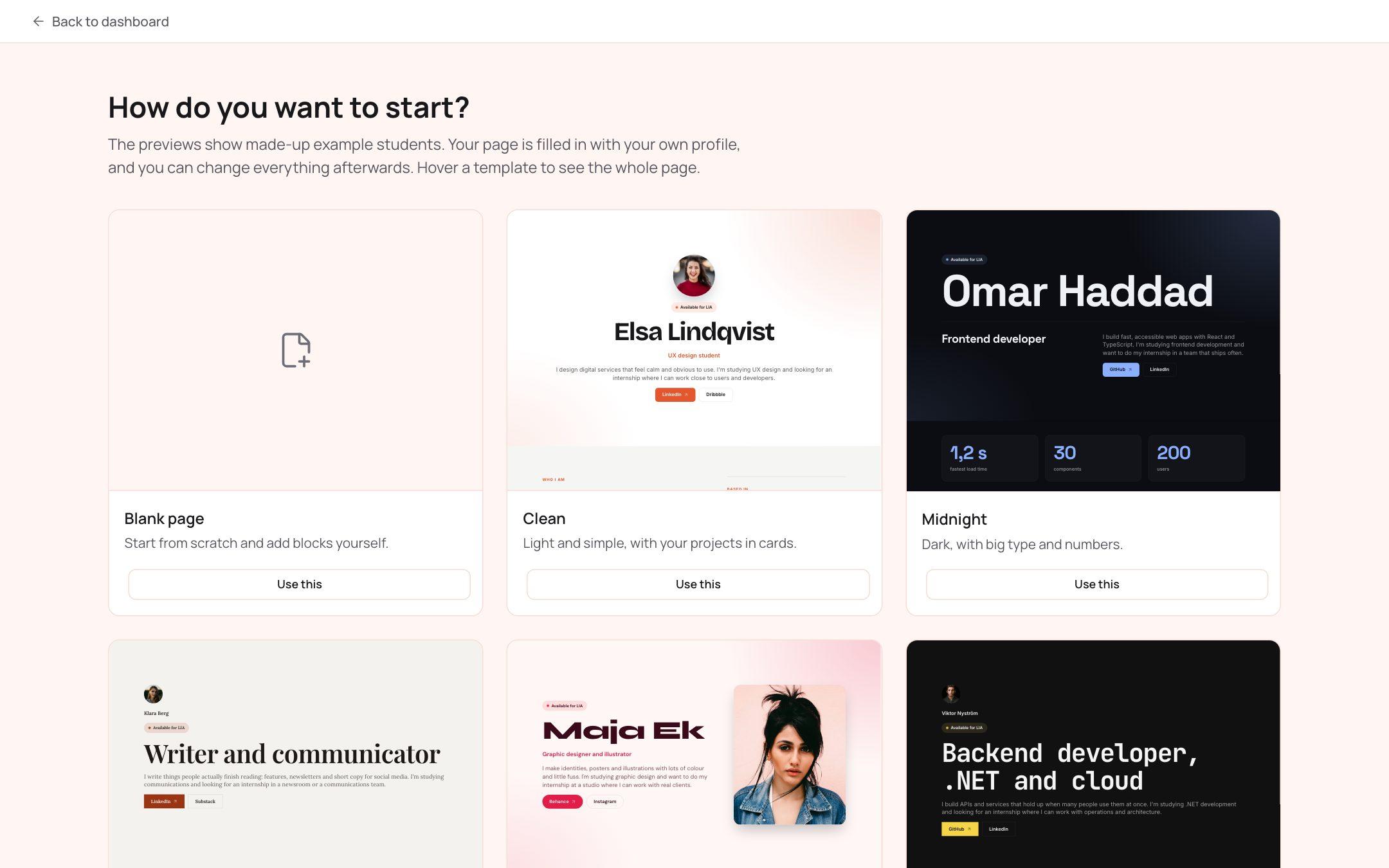
Best of all: you don't need to code or design. With Student Plus, or when your school uses LIA4ALL, you build your own portfolio website right on the platform. Pick one of ten templates, it fills itself in from your profile, and you have a finished page right away. Then drag in projects, slideshows and videos, and add up to ten pages with your own menu.
A checklist gives you a score and shows exactly what's missing, and the AI helper rewrites texts and builds sections for you. When you're happy, publish it at your own address, like yourname.lia4all.se, and paste the link into your applications. Your site doesn't show up in Google, so you decide who gets to see it.